service nexus

Uncategorized

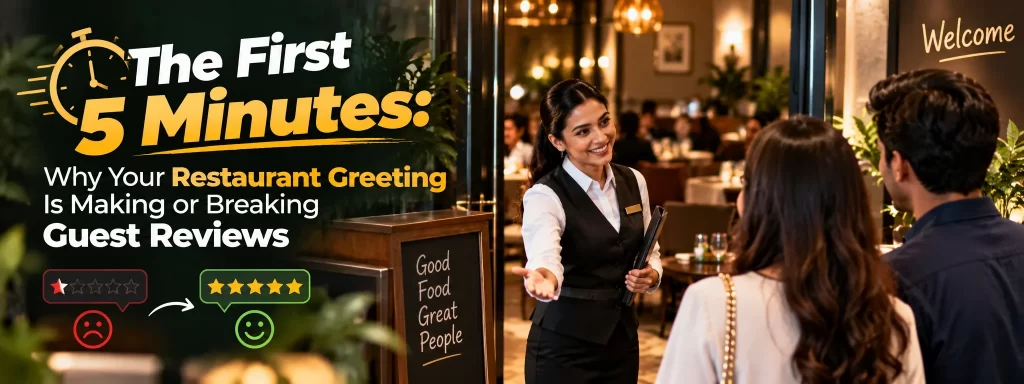
The First 5 Minutes: Why Your Restaurant Greeting Is Making or Breaking Guest Reviews

Guests decide how their meal will go within the first five minutes of entering your restaurant. If they are ignored at the door, wait too long for water, or feel unwelcome, they start the meal already annoyed. This blog explains why the first greeting, eye contact, body language, and serving water within 60 seconds of seating can make or break your guest reviews. Why the First 5 Minutes Matter In today’s world, guests judge your outlet quickly: If the start is slow or cold, even great food may not fully fix the impression. But a warm, fast start can forgive small mistakes later. The 4 Key Elements of a Strong First Impression 1. Host/Hostess Greeting at the Door The first person the guest sees sets the mood. Train your host/hostess to: A strong door greeting tells the guest: “You are important here.” 2. Eye Contact and Body Language Staff body language speaks louder than words. Do: Avoid: Guests feel respected when they see your face and eyes, not just your back. 3. Fast Seating and Clear Communication Once the guest is welcomed: If there is a wait, inform them honestly: Clarity reduces frustration. 4. Water Within 60 Seconds of Seating This is a simple but powerful rule: serve water within the first 60 seconds of seating. Why it matters: Train servers to: This small habit creates a strong impression of speed and care. Simple Phrases Your Front Team Can Use Practice these until they sound natural, not robotic. A Quick Training Drill Role‑Play: “The First 5 Minutes” After each round, ask: What Changes When You Fix the First 5 Minutes About the Author I am an F&B Service Trainer working with hotels and restaurants across India. I help teams design strong first‑impression standards—greeting, seating, body language, and fast water service—to improve guest reviews and repeat business. If you want a custom front‑of‑house training plan or greeting scripts for your outlet, you can contact me through this website.
Uncategorized

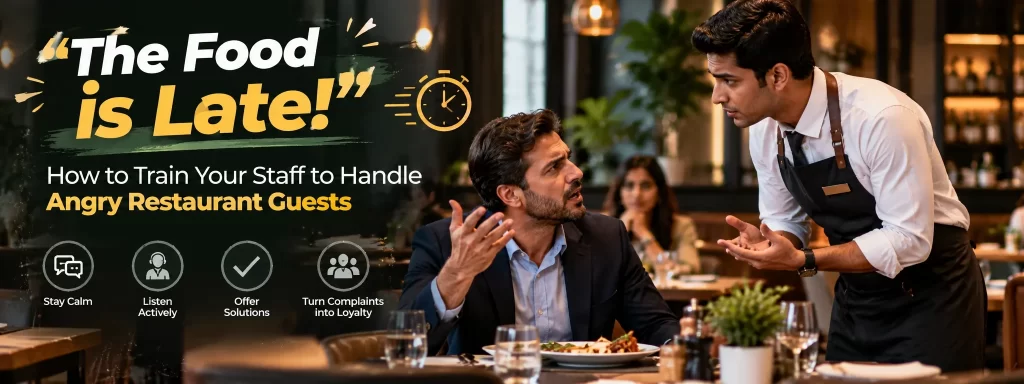
The Food is Late!” – How to Train Your Staff to Handle Angry Restaurant Guests

Mistakes happen. Food gets delayed. Guests get upset. In Indian hotels and restaurants, untrained staff often freeze, argue, or disappear into the kitchen. That makes the situation worse. This post gives a simple 3‑step formula your staff can use on the floor to calm an angry guest, handle complaints politely, and turn a bad experience into a 5‑star review. Why Most Staff Fail with Angry Guests When a guest says, “The food is late!” or “This is not what I ordered!”, many servers: These reactions make the guest feel ignored and disrespected. The result? Negative reviews, lower ratings, and lost repeat business. The 3‑Step Formula: Listen, Apologise, Act Train your team to follow these three steps every time a guest is upset. Step 1 – Listen Without Interrupting Let the guest speak first. Do not: Do: Listening alone often reduces anger by 50%. Step 2 – Apologise Sincerely (No Excuses) A good apology is short, clear, and takes responsibility. Examples: Avoid: Guests don’t want reasons first. They want to feel heard and respected. Step 3 – Act Fast and Offer a Solution After listening and apologising, act quickly. For “food is late”: For wrong order or quality issue: The key is speed + clarity + a small goodwill gesture when appropriate. Simple Phrases Your Staff Can Memorise Teach your team these ready lines: Practice these in role‑plays until they sound natural. A Quick Training Drill Role‑Play: “The Angry Guest” After each round, ask: What Changes When You Train This Way About the Author I am an F&B Service Trainer working with hotels and restaurants across India. I help teams handle difficult guests politely, reduce complaints, and protect online ratings through simple, practical training. If you want a custom complaint‑handling script or training plan for your outlet, you can contact me through this website.

Uncategorized

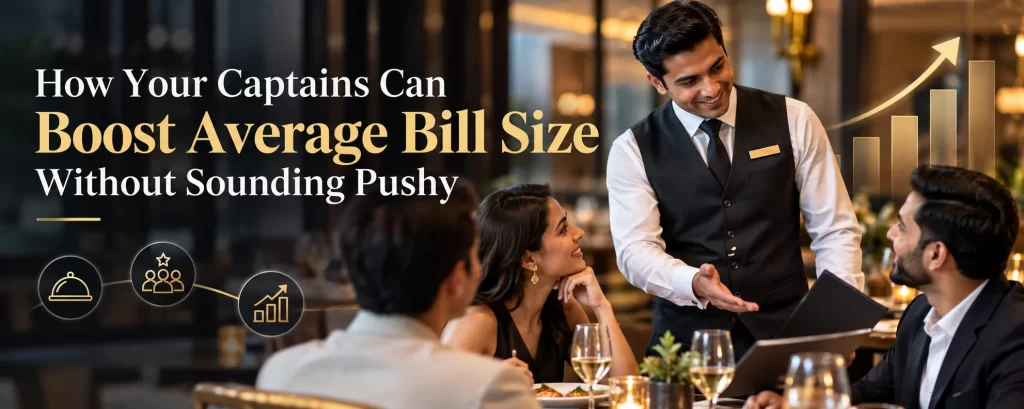
How Your Captains Can Boost Average Bill Size Without Sounding Pushy

In many Indian hotels and restaurants, captains act like “order‑takers”. They note what the guest asks for and stop there. This keeps your average bill size low, even when your outlet is busy. The solution is not pushy selling. It’s training your team to be helpful guides who suggest the right items at the right time. Why “Order‑Takers” Cost You Money When staff only take orders: Guests miss high‑margin dishes, upgrades, and add‑ons. Average bill value stays flat, even with good footfall. Staff lose chances to improve the guest experience with better pairings. In a competitive Indian F&B market, every table must contribute more revenue—without making guests feel “sold to”. The Simple Mindset Shift Train your captains to think: “My job is to help the guest have the best possible meal, not just to note their order.” With this mindset, suggestions feel like care, not pressure. Easy, Guest‑Friendly Upselling Techniques 1. Use “Either/Or” Suggestions Instead of: “Would you like anything else?” Try: “Would you prefer garlic butter prawns or tandoori platter to start?” Or: “Should I add a fresh lime soda or masala chai with your meal?” 2. Pair Items with What They’ve Ordered Biryani → “Many guests enjoy raita or salan with this; shall I add one?” Grilled fish → “Our chef recommends garlic vegetables or lemon rice as a perfect side.” Main course → “Would you like to try our signature dessert? The gulab jamun cheesecake is very popular.” 3. Highlight “Chef’s Recommendation” or “Most Ordered” Simple lines like: “This is our chef’s special today.” “This is the most ordered starter among families.” 4. Upgrade, Don’t Just Add “Would you like to upgrade to the large thali? It includes two extra curries and dessert, and it’s better value.” “For just ₹150 more, you can get the premium seafood platter instead of the regular one.” 5. Train for Timing, Not Just Scripts Starters: after drinks, before main course. Mains: after starters, while guests are still engaged. Desserts and beverages: after plates are cleared, before the bill. A Simple Training Drill Role‑Play: “The Helpful Captain” Split staff into pairs: one guest, one captain. Guest orders something simple (e.g., chicken biryani + water). Captain suggests: one starter/side, one beverage, one dessert. Rotate roles and repeat with different cuisines. Then discuss: Which suggestions felt natural? Which felt forced? Refine the language together. What Changes When You Fix This Average bill size increases without discounts. Guest satisfaction improves as they discover better options. Staff earn more through higher tips and incentives. Your outlet becomes more profitable with the same number of covers. About the Author I am an F&B Service Trainer working with hotels and restaurants across India. I help outlets train captains and servers to boost average bill size in a guest‑friendly, non‑pushy way. If you want a custom training plan or sample upselling scripts for your menu, you can contact me through this website.

Scroll to Top